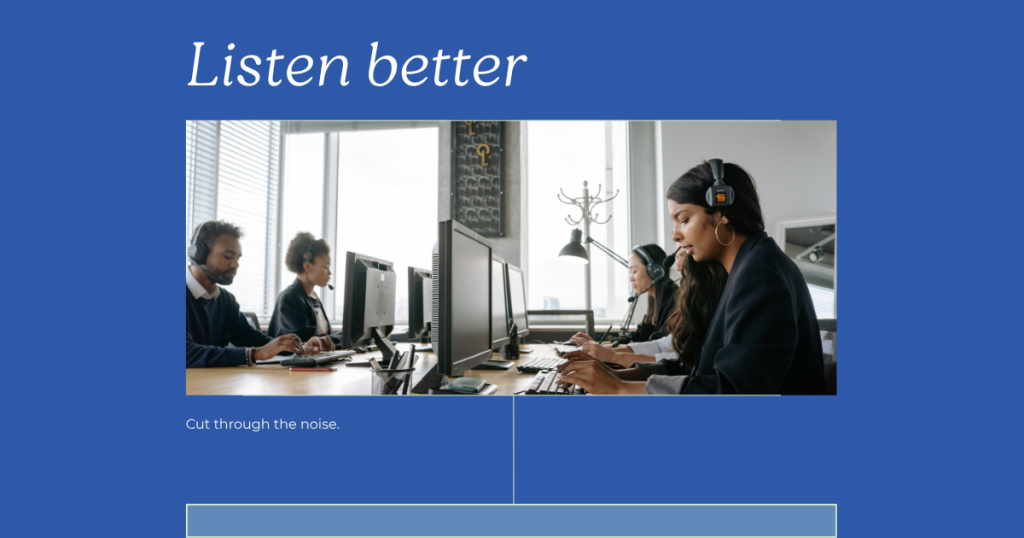
The problem with work is that it interferes so often with our ability to hear one another. Sometimes this is physical: work can be noisy. More often it is metaphorical: work makes our heads so noisy that we miss things we would hear if we were quiet. The more intensely we want to get something done, the harder it is to listen before jumping to the next step.
In forty years of teaching communication, I read a lot of books and textbooks. Almost all of them teach goals and functions separate from listening and rapport. This means that almost all of them falsify the experience and choices you have to make every day. There are so many demands on your time and attention. Isn’t it more efficient to listen for key points or phrases and then jump off to something else?
Moving on before you have heard what someone wants to say is not efficient. It leads to misunderstandings and mistakes that have real, measurable costs. Plunging ahead with a message that is incomplete or comes from a different point of view is also not efficient. It ensures that the other person will fill in the blanks with their best guess (which will often not be what you had in mind).
Listening with empathy is not just about being a decent human beings. It’s about making an effort to build communication strong enough to withstand all the noise of the workplace. When you listen, you separate the signal from the noise. And that makes you better connected and more effective.