The difference a word makes

8 November 2025

By Linda Ferguson

Would you play a quick game with me? Think of the word “service.” What comes to mind? What does the word tell you about the person who offers service and the person who receives it?

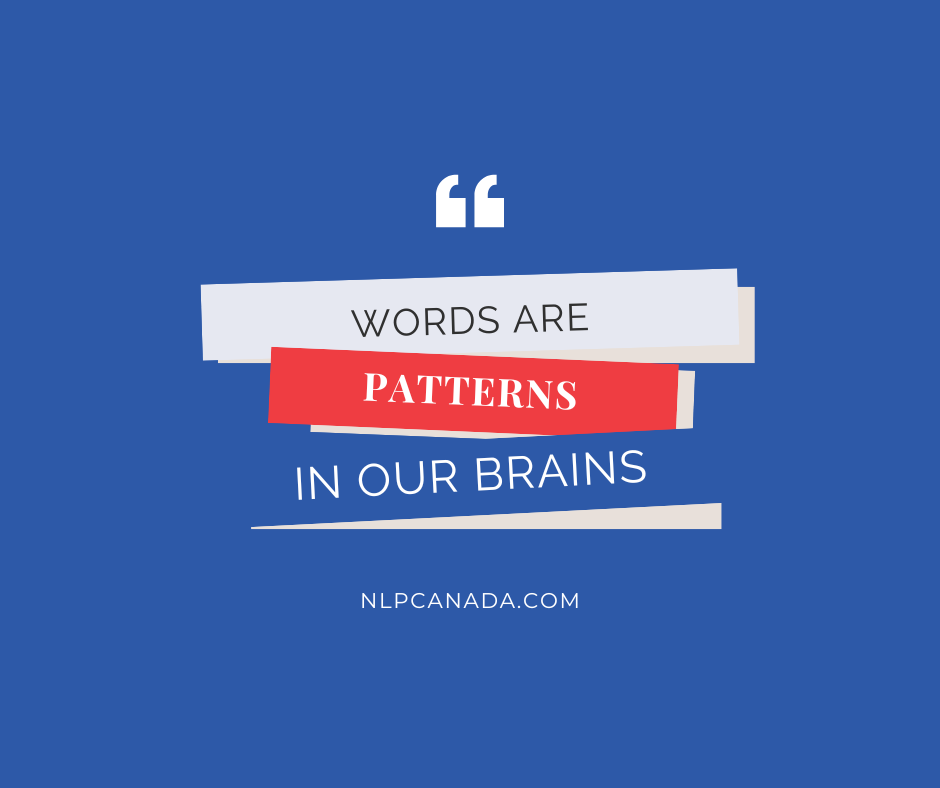
In NLP, we say that what a word means is what it triggers in the brain of the receiver. This can be different for different people and it can be different in different contexts.

For instance, now think of the phrase “customer service.” What comes to mind is likely to be quite different, even after priming your expectations with service. Customer service is usually paired with a story about how an organization protects itself against its customers. I will tell you two quick stories that come to mind when I hear “customer service.”

I was in my bank last week (in person!) trying to make some transfers from another bank. That part went quite well. But when I also wanted to close an old account, I was told I would need to call. Since the account does not charge me fees and costs the bank something to administer, I suggested I was unlikely to spend a half hour waiting for someone to help. So the person sitting in front of me called for me–using his internal ID. It was about a half hour before he got an answer. It would cost me $100 to close the account. Not likely to happen and not a great impression to make as I decide where to invest the bulk of my savings.

The second story is about a retailer who sent me an email (I’m on their list) announcing a sale. I went to the website and placed an order. Tracking stopped after the first day and the package never arrived. And that’s when I discovered that they only have AI customer support. An AI that said repeatedly that it could not find the order that was on the open webpage where the chat was located. I tried an email form which reached an AI that said it would send my case to a human. No one reached back I went to a physical store and asked for help: the result was an email that might have been sent by a human promising to track my package. I received five different requests to answer a “How did we do?” survey but no help so far.

With these experiences in mind, you can see that “customer service” feels like a label given to a department designed to provide as little help as possible to customers. What happens to service in our brains when we repeatedly pair it in a phrase like customer service?

What fires together, wires together. For most people, the idea of service (which can involve generosity and integrity and providing care) now also fires the idea of customer service (frustration, problems, stonewalling). This means that when you try to use the word in its first sense, you are also inviting the second meaning.

To use words better, we need to know that the firing of patterns in the brain happens faster than we can move on to explanations or stories. We need to be conscious that some words no longer mean what the dictionary says they mean: they mean the connection of one meaning to others in a neural web. You can’t choose what fires when you use the word: you can only anticipate corrupt connections and use a different word instead.

Share this post:

Related posts

30 May 2026

When purpose kicks in

Purpose is not a panacea, and it doesn’t always change the cost of the behaviours it motivates. But it does remind you that each situation, each moment, is tied to a bigger picture. That bigger frame manages stress (it doesn’t eliminate it) and provides a pathway out of the cubicle and back into the whole of your life. When the environment is warm and supportive, you can drift. When it’s suddenly difficult, purpose helps you keep the boat steady and navigate.
9 May 2026

Uncover the important

The important thing, the thing that will make positive change happen, is not on the surface and it’s not obvious as you look at the status quo. I NLP is, among other things, a methodology for coming at an issue from different perspectives until you understand what is different and important. With that knowledge, you are more capable of crafting a brief message that interrupts the flow of the routine and prompts new recognition or action.
Hold your peace
28 March 2026

How to be confident enough to say nothing

Holding your peace means knowing why you aren’t speaking and remaining clear on where you want to go next. It means that you are accountable for your own communication, and you are not provoked when speaking out won’t help. It means knowing you are accountable for the impact of your words.

The NLP Practitioner Certification Details and Pricing

NLP Canada Training Practitioner Certification


At NLP Canada Training, you’ll work with a community that turns the best evidence into

practical techniques. Ask questions, practice hard, and have fun while you learn to make

change happen in you and around you. Neurolinguistic programming (NLP) is a toolkit for

learning, development and change. It was developed in the 1970s as a practical way to help people identify better choices for their feelings, goals and relationships.

Pricing

Individual plus Individual Application Sessions (3)  $2285 + tax

Individual $1885 + tax

Couples, Groups, Retired Seniors, or Full-Time Students, $1425 + tax per person

NLP Practitioner plus the NLP Master Practitioner, $3285 + tax per person

Payment Plans

We’ll work with you to develop a payment plan you can manage. Normally a 20% deposit is

required before the course begins, and we’ll agree on monthly payments to be made by pre-authorized credit card or PayPal. There are no extra interest charges or fees as long as you make your payments regularly.

Live on Zoom

Training is live on Zoom and you will spend most of your time in a breakout space with one or two other people. Days run from 10:00 AM Eastern to 5:30 PM Eastern (Adjust for your time zone). We never record and we do not allow recording.

Dates for 2026/27

Season


Start

All Session Dates

Summer/Fall 2026

Fri. Aug 28

Fri/Sat/Sun Aug 28/29/30 and Fri/Sat/Sun Sept 11/12/13 and Oct 3/4

Fall 2026

Fri. Oct 30

Fri/Sat/Sun Oct 30/Nov ½ and Fri/Sat/Sun Nov 13/14/15 and Sat/Sun Nov 28/29

Winter 2027

Fri. Jan 22

Fri/Sat/Sun Jan 22/23/24 and Fri/Sat/Sun Feb 5/6/7 and Sat/Sun Feb 20/21

Spring 2027

Fri. Mar 5

Fri/Sat/Sun Mar 5/6/7 and Fri/Sat/Sun Mar 19/20/21 and Sat/Sun Apr 3/4

Late Spring 2027

Fri. Apr 23

Fri/Sat/Sun Apr 23/24/25 and Fri/Sat/Sun May 14/15/16 and Sat/Sun June 5/6


More Questions? Contact us for a free consultation

Email: linda@nlpcanada.com

Office: 416-928-2394

Cell: 289-242-5089

NLP Canada Training Practitioner Certification

At NLP Canada Training, you’ll work with a community that turns the best evidence into

practical techniques. Ask questions, practice hard, and have fun while you learn to make

change happen in you and around you. Neurolinguistic programming (NLP) is a toolkit for

learning, development and change. It was developed in the 1970s as a practical way to help people identify better choices for their feelings, goals and relationships.

Pricing

Individual plus Individual Application Sessions (3)  $2285 + tax

Individual $1885 + tax

Couples, Groups, Retired Seniors, or Full-Time Students, $1425 + tax per person

NLP Practitioner plus the NLP Master Practitioner, $3285 + tax per person

Payment Plans

We’ll work with you to develop a payment plan you can manage. Normally a 20% deposit is

required before the course begins, and we’ll agree on monthly payments to be made by pre-authorized credit card or PayPal. There are no extra interest charges or fees as long as you make your payments regularly.

Live on Zoom

Training is live on Zoom and you will spend most of your time in a breakout space with one or two other people. Days run from 10:00 AM Eastern to 5:30 PM Eastern (Adjust for your time zone). We never record and we do not allow recording.

Dates for 2026/27

Season


Start

All Session Dates

Summer/Fall 2026

Fri. Aug 28

Fri/Sat/Sun Aug 28/29/30 and Fri/Sat/Sun Sept 11/12/13 and Oct 3/4

Fall 2026

Fri. Oct 30

Fri/Sat/Sun Oct 30/Nov ½ and Fri/Sat/Sun Nov 13/14/15 and Sat/Sun Nov 28/29

Winter 2027

Fri. Jan 22

Fri/Sat/Sun Jan 22/23/24 and Fri/Sat/Sun Feb 5/6/7 and Sat/Sun Feb 20/21

Spring 2027

Fri. Mar 5

Fri/Sat/Sun Mar 5/6/7 and Fri/Sat/Sun Mar 19/20/21 and Sat/Sun Apr 3/4

Late Spring 2027

Fri. Apr 23

Fri/Sat/Sun Apr 23/24/25 and Fri/Sat/Sun May 14/15/16 and Sat/Sun June 5/6

More Questions? Contact us for a free consultation

Email: linda@nlpcanada.com

Office: 416-928-2394

Cell: 289-242-5089