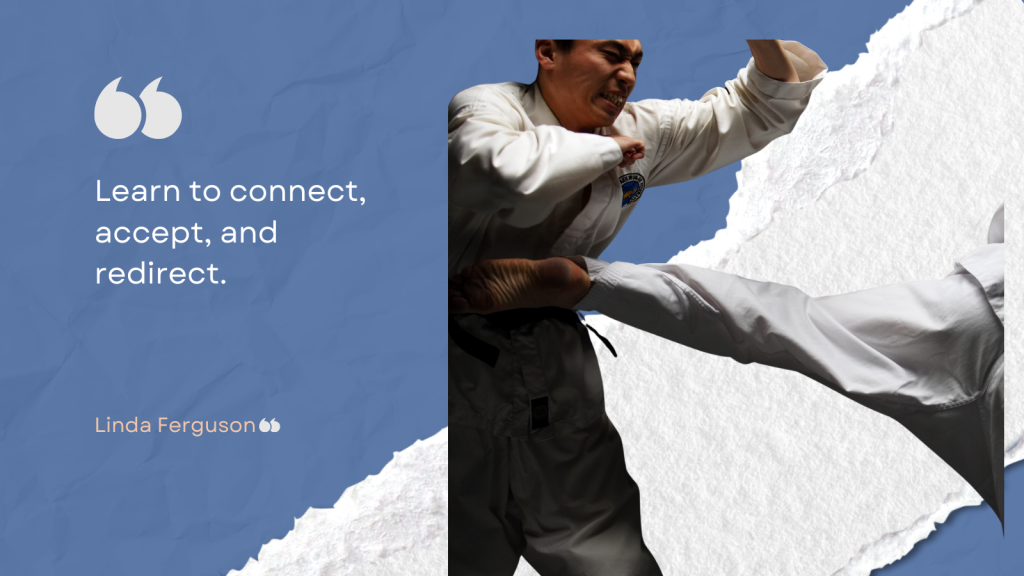
You probably have a vague idea that having leverage means being able to make an impact, and you might realize that it means making an impact with less effort. But most of us are a little fuzzy on the physics, and fuzzier still on how to apply it to the obstacles we face in our own lives.
The idea of leverage point requires systems thinking: that means understanding that any change in a system may be capable of changing the whole system. If you find the right button to push, you can solve bigger problems in fewer steps with less effort. But how do you recognize the small action that will generate significant results?
Three NLP concepts help:
- Clarity about goals and values will drive your best unconscious choices.
- A change in perspective or emotion is effective in generating new choices and behaviours.
- You don’t have to be right. You have to try something and observe the results.
An NLP process for recognizing a leverage point begins with knowing what you want, both in terms of your goals and the values they represent. When you know your direction, you can ask yourself for a choice point, an experience past, present, or future that is getting in your way. Primed by your clear goals, your brain will scan for an experience that is blocking your progress. It may involve an external obstacle, but it will certainly involve a belief that you can only feel one thing or make one choice (and those won’t help you move toward your goal).
You could pick a choice point consciously, but you will have a better chance of leverage if you allow your brain to compare your goals to your experiences and send something into your conscious awareness. Your brain has access to all of your experience; your mind works from a more limited data set.
In NLP, we change choice points by adding new feelings (states) or perceptions (perceptual positions) into our existing memory (a sensory-based representation of the obstacle or experience). Changing what we feel and notice is within our own control and is relatively easy to do in small steps. It’s a small change that might generate a big impact (a leverage point).
In the final step, you think about the choice point and notice what is different as you encounter it with different perceptions and feelings. What becomes possible in your new state? How does changing the choice point allow you to move toward your goal?
A small shift makes you feel more confident. A bigger shift motivates you to take a series of actions, generating more possibilities for leveraging change.