You know you should practice, whether that means going to the gym, picking up your guitar, or building a skill you are developing at work on in a training. No one ever says, “this is worth doing, and I’ll pick it up overnight and be a master.”
But it’s hard to make time for something you already know, something that won’t make an immediate difference, something that doesn’t feel either new and exciting or familiar and safe. Practice triggers resistance because:
• your brain likes to take familiar behaviours and automate them. If you’re thinking about them, you’re using less of the neurological resources you might need for something urgent
• your mind loves novelty. It’s the part of you that wants to stretch your learning beyond your boundaries. Practice feels too much like colouring inside the lines.
• your social self loves connecting to others but much of your practice needs to happen on your own. Alone is not an easy word.
We learn through difficulty. We learn through applying will-power because we have a goal we are not yet ready to achieve. We learn by doing things we know are good, even when they don’t feel good. And we learn because life requires it of us. If we don’t change, we don’t thrive in a world that is changing around us.
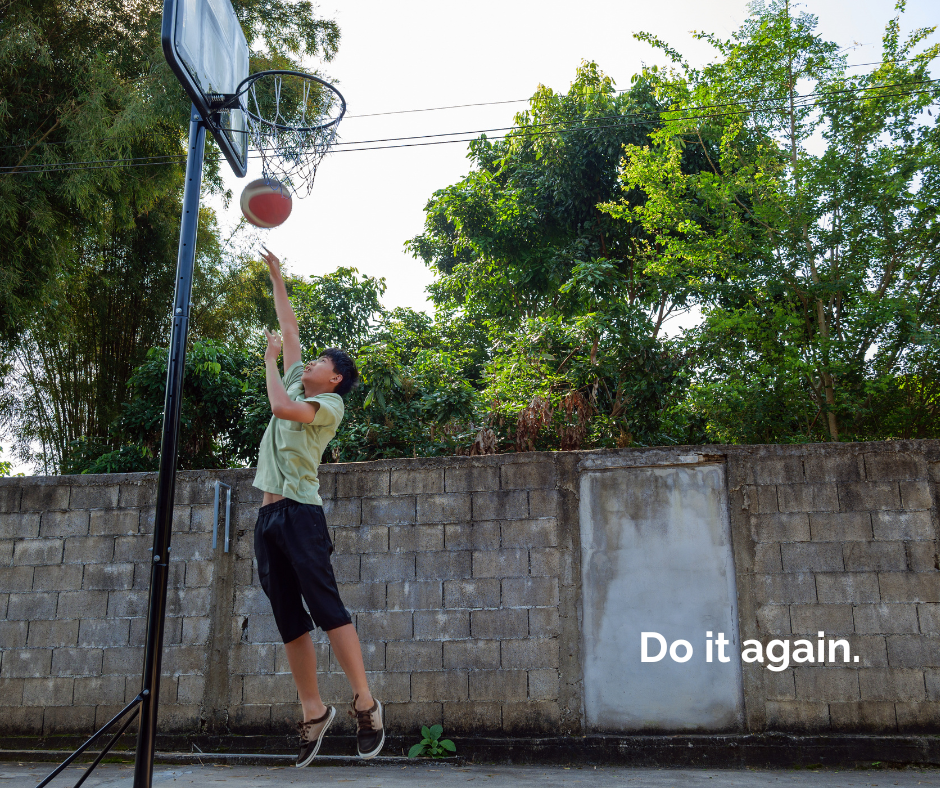
There are wins. There is the moment when you do something for the hundredth time and get a better result. There is the moment when getting the same result over and over gives you the confidence that you’ll sink the big shot when the game is on the line. There are small, satisfying steps toward mastery.
But you have to practice to get to those wins. You have to be prepared to overcome inertia and do it before it feels good.