You probably think that practice is a chore, something you grind out because it’s necessary. You know that mindful practice with feedback is an excellent way to progress and you’ll do it. . . when you’re not so busy or so tired. That’s one way to look at it.
Another way to look at it is that you haven’t learned how to practice effectively. If you had, you’d know that practice has benefits outside of the improvement of a skill.
Could you use some flow time? Time when you engage all of your attention is something that stretches you just enough so that your attention doesn’t wander. In NLP, we call this congruence. All of your attention wrapped up in one thing, a state where you learn efficiently and learning feels good. Wouldn’t it be great to let go of all the noise for a while?
Is it time to take a risk? One of the things that regularly inhibits innovation is people’s fear of being wrong. We fear making mistakes, and so we don’t try the new things that would make a difference. Good practice is always practice in making mistakes. Mistakes are a sign that you are reaching beyond your current competency so you can grow. If you are not making mistakes in practice, you’re not practicing right. That’s a reframe that prepares you for the chances you have to take to innovate and lead.
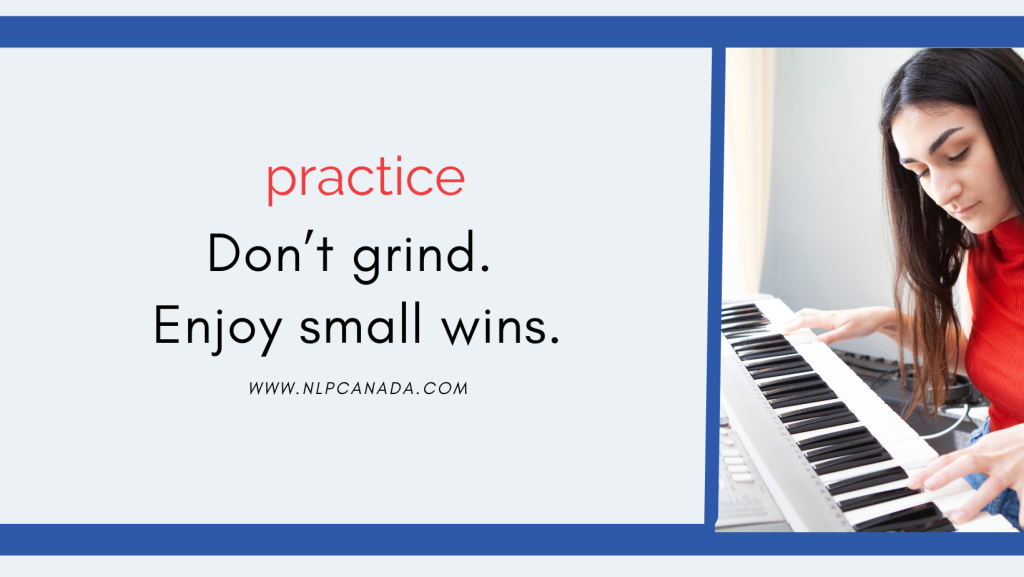
The flip side is also true. Practice is a reliable way to produce small, meaningful wins. And small wins are motivating. They don’t just make you feel good about what you have already done: they make you want to do more. When most of your projects are complicated and it’s hard to see what you have accomplished today, the small wins of practice sessions can keep you moving forward.
If you are a leader of people, you probably value their ability to stay focused, motivated, and innovative. Creating opportunities for mindful practice with feedback is no more complicated than creating team days that emphasize planning or learning. And only practice generates clear, research-backed benefits on so many fronts at once.