Bullet holes in airplanes and other challenges

2 May 2026

By Linda Ferguson

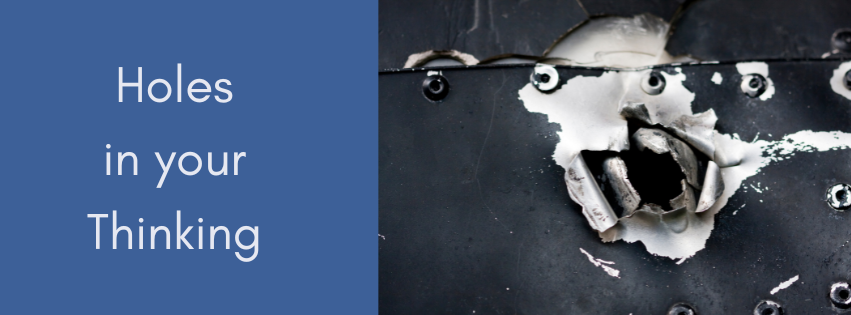
There’s a famous story about World War II planes that survived attacks. They were studied to see where they had been hit, and the results were mapped. The map showed some dense clusters of hits, and some experts recommended that planes be reinforced in these areas. But Abraham Wald disagreed.

Wald argued that they should reinforce the areas that had no bullet holes. Why? Because the planes that were hit in those areas did not survive to be studied. That’s where the greatest danger was. Read more about it here.

It’s now called survivorship bias. I was reminded of the concept the other day when I saw a post about AI that argued using AI was like using calculators. Everyone worried when calculators were introduced that they would weaken math skills. But we’re fine. . . or are we?

If we look at the survivors, we might see people who are still good at math. They took courses in financial mathematics or statistics and they have some sense of how to read trends. But maybe we have been looking at the survivors, and not the whole picture.

Does this mean that you should stop using the calculator function on your phone or trusting the machines to calculate your tips? No. But it does mean that you should test your critical thinking instead of counting on it.


Share this post:

Related posts

2 May 2026

Bullet holes in airplanes and other challenges

I saw a post about AI that argued using AI was like using calculators. Everyone worried when calculators were introduced that they would weaken math skills. But we’re fine. . . or are we? If we look at the survivors, we might see people who are still good at math. They took courses in financial mathematics or statistics and they have some sense of how to read trends. But maybe we have been looking at the survivors, and not the whole picture.
Posture Rhythm Breath
23 April 2026

The body changes the story

Sustained change can be great and important, but sometimes we just need to see the present a little bit differently. And that can happen, on time and on purpose, when we make small alterations in our physiology and allow those changes to change what we notice and feel.
18 April 2026

From seething to focus

Do you know that moment when you are so frustrated and everything you think or say twists you a little more on the inside? That moment when you confront another person, and you can’t find the right words and that makes you even more upset, with yourself and with the situation? What if being aware is the first step and the next step is learning. . . learning how people shape and respond to situations and feelings. . . learning how to move from noticing your feelings to fine-tuning them as tools for making choices. . . learning how to feel comfortable in your own skin, even when you are uncomfortable in the moment. . .