Have you been in this situation? Someone you love is experiencing symptoms that send them to the emergency department. For several hours, you know that the danger is not immediate (no one is rushing), but you also know the problem could be life-altering. You probably don’t want to leave to find food or drink, and the seating is uncomfortable at best.
What will get you through with the clarity and calm that helps the person you love? It’s your sense that you have something important to do: clarity and calm are your purpose. As the hours tick by and you combine boredom with worry, you hold onto the need to be genuinely helpful.
Purpose does not mean you don’t have to look after yourself. It means you have to stay aware of yourself in relationship to the impact you want to have. You don’t need to appear calm and clear: you need to BE calm and clear. And later, you will need to sit with all the emotions that would have muddied that state, and work through them so that you will be ready next time.
Purpose is not a panacea, and it doesn’t always change the cost of the behaviours it motivates. But it does remind you that each situation, each moment, is tied to a bigger picture. That bigger frame manages stress (it doesn’t eliminate it) and provides a pathway out of the cubicle and back into the whole of your life.
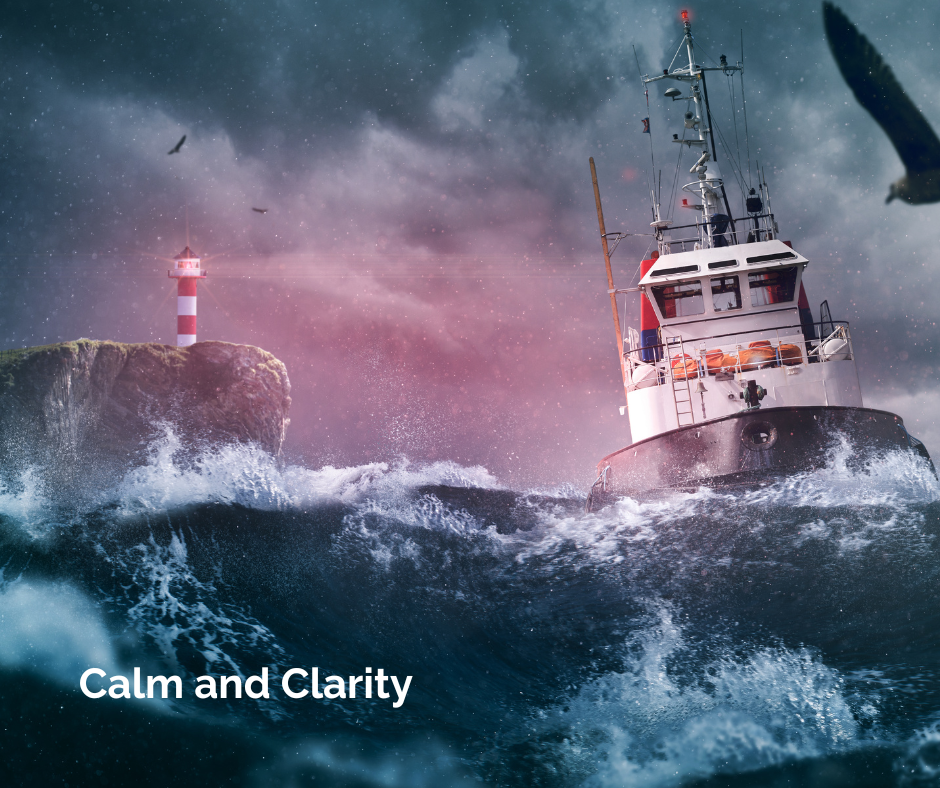
When the environment is warm and supportive, you can drift. When it’s suddenly difficult, purpose helps you keep the boat steady and navigate.