How to be confident enough to say nothing

28 March 2026

By Linda Ferguson

Hold your peace

It used to be called holding your peace. Many people think it means to say nothing. But actually, it means something like knowing when more talk won’t help. And, paradoxically, it doesn’t start out feeling peaceful. It feels like an argument with yourself.

What happens when somebody says something outrageously unfair? Maybe there are people in your life who like to push your buttons. Or maybe sometimes someone says something you think is spectacularly dumb. The voice in your head pushes forward with a loud defence or some well-placed sarcasm. But some other part of you knows that it won’t go over well, and it won’t get you where you want to go. So either you blurt out something (and it doesn’t go well) or you hold your tongue, and lose your peace.

Holding your peace means knowing why you aren’t speaking and remaining clear on where you want to go next. It means that you are accountable for your own communication, and you are not provoked when speaking out won’t help. It means knowing you are accountable for the impact of your words.

It requires confidence because it doesn’t always feel good. You never lose the child’s desire to protest “it’s not fair.” You never lose the teen’s desire to make the great burn, to say the words that cut and impress at the same time. You never lose the adult desire to be seen to be right. Instead, you dive deep into the part of you that knows what you want to achieve and what you are willing to do to achieve it. And you stay there, resisting all the urges to leave your peace and your path.

You might be confused. You might be thinking, “isn’t peace supposed to be easy?” But the world is full of wisdom traditions and they all agree that holding peace is much harder than letting go and just saying what you feel like saying. You can only do it when you know what you value and where you want to go.
Share this post:

Related posts

27 June 2026

Choices in transition

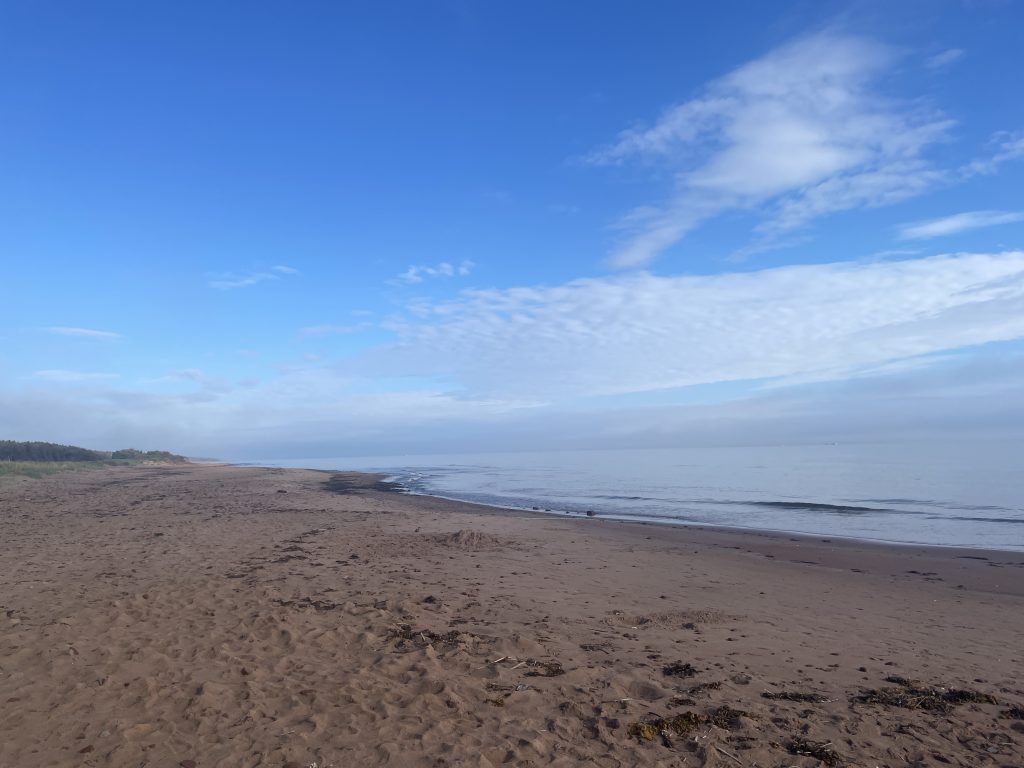
When I walk the beach, I don’t expect a straight line. I expect the edge to move, and that sometimes I will walk it easily and sometimes I will move away for awhile, and sometimes I might be cold and wet. I don’t expect the unexpected. I expect the tensions that govern the edge. And because I expect them, I can enjoy moving through them. All transitions are temporary, even when you’re not sure what’s on the other side.
17 June 2026

Practice taking smaller bites

Are you in the best state for moving forward? If you were, you’d already be taking action. The first small step is to move into a more capable state. You could do this by putting yourself into a different environment, connecting to a person with different strengths, or moving your body in a different way. This step is so small that it has no direct impact on the thing that has you stuck.
30 May 2026

When purpose kicks in

Purpose is not a panacea, and it doesn’t always change the cost of the behaviours it motivates. But it does remind you that each situation, each moment, is tied to a bigger picture. That bigger frame manages stress (it doesn’t eliminate it) and provides a pathway out of the cubicle and back into the whole of your life. When the environment is warm and supportive, you can drift. When it’s suddenly difficult, purpose helps you keep the boat steady and navigate.

The NLP Practitioner Certification Details and Pricing

NLP Canada Training Practitioner Certification


At NLP Canada Training, you’ll work with a community that turns the best evidence into

practical techniques. Ask questions, practice hard, and have fun while you learn to make

change happen in you and around you.

Course Content

The course is structured to allow practice of the four core skills of NLP: managing state; managing rapport and connection; recognizing patterns in language and behaviour; and setting effective intentions and goals. Each day, different aspects of these skills are learned in relation to solving a problem or developing a direction. The course includes recognizing and making the most of emotions, connections, limited resources, stress, negotiation and collaboration, influence, and learning and development.

Pricing

Individual plus Individual Application Sessions (3) $2285 + tax

Individual $1885 + tax

Couples, Groups, Retired Seniors, or Full-Time Students, $1425 + tax per person

NLP Practitioner plus the NLP Master Practitioner, $3285 + tax per person

*Tax is applied depending on the province or country in which you reside.

Payment Plans

We’ll work with you to develop a payment plan you can manage. Normally a 20% deposit is

required before the course begins. This is non-refundable but can be applied to a future session of the certification if your plans change.

Payment can be made in full or by installments (normally 3-5). All payments are made through your credit card or bank using QuickBooks payments.

Live on Zoom

Training is live on Zoom and you will spend most of your time in a breakout space with one or two other people. Days run from 10:00 AM Eastern to 5:30 PM Eastern (Adjust for your time zone). We never record and we do not allow recording.

Dates for 2026/27

Season


Start

All Session Dates

Summer/Fall 2026

Fri. Aug 28

Fri/Sat/Sun Aug 28/29/30 and Fri/Sat/Sun Sept 11/12/13 and Oct 3/4

Fall 2026

Fri. Oct 30

Fri/Sat/Sun Oct 30/Nov ½ and Fri/Sat/Sun Nov 13/14/15 and Sat/Sun Nov 28/29

Winter 2027

Fri. Jan 22

Fri/Sat/Sun Jan 22/23/24 and Fri/Sat/Sun Feb 5/6/7 and Sat/Sun Feb 20/21

Spring 2027

Fri. Mar 5

Fri/Sat/Sun Mar 5/6/7 and Fri/Sat/Sun Mar 19/20/21 and Sat/Sun Apr 3/4

Late Spring 2027

Fri. Apr 23

Fri/Sat/Sun Apr 23/24/25 and Fri/Sat/Sun May 14/15/16 and Sat/Sun June 5/6


More Questions? Contact us for a free consultation

Email: linda@nlpcanada.com

Office: 416-928-2394

Cell: 289-242-5089